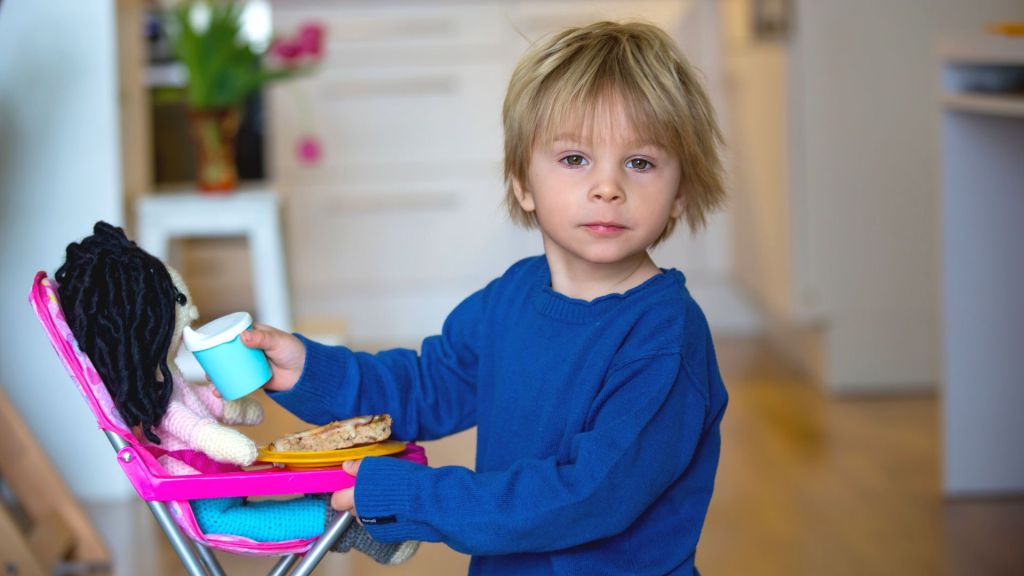
Often in preschool, children identify with a color or a toy that seems to belong to the other gender. This is all totally natural and healthy even. So yes, sometimes a boy will play with the dolls and a girl will play with the cars.
We might hear a comment like, “I don’t like pink, it’s a girl color.” When it comes time to clean up, a boy might not want to touch or pick up anything they think is a “girl toy.” We even had a child tell us there was nothing to clean up, when there were toys still laying around, most of them being what he would call “girl toys.” This goes both ways… girls will do the same thing, referencing a “boy toy” or saying they don’t like “boy colors.”
So, what do you do when this happens? Here are some ideas that have been helpful to us, and we hope will help you in dealing with this situation.
Reinforce the idea there is no such thing as a boy or girl color.
Teach your kids that all the colors are for everyone! Colors don’t need to be gender specific and kids should just like what they like.
Make sure they know they can play with ANY toy.
It doesn’t matter what it is. No one should be teased about the toy they have chosen to play with. Explain that all the toys are for everyone and it is okay if someone makes a different choice than they would make.
Teach them we all have a responsibility to help.
During clean up time, make sure they all take part in helping to put toys away. A child can and should pick up toys they did not play with or toys they may think are a “girl” or “boy” toy. We all help each other.
Establish that we are all friends, no matter what.
In preschool, we should all be friends, and girls and boys can sit by each other. Bullying and being unkind is not acceptable because one happens to be a boy and one a girl — or for any other reason!
A LESSON LEARNED IN PRESCHOOL… is that generally children respond well to the idea someone who makes a different choice than they would can still be their friend. A discussion about colors and toys being for everyone and not gender-specific is usually well received. In fact, some of them pause and say, “Oh, I like that color, too.” Then they name three other colors they like, as well. Gender bias in a 3 or 4-year-old has almost always been picked up from an older sibling, friend, or relative. We can help them consider other ideas that are less biased.
It is important for children to feel their preferences or choices are okay. No other child (or adult!) has the right to take that from them. It’s okay to like something different than their friends. This is an important first step in teaching children to think for themselves, rather than follow the crowd. This proves to be an important skill later in life when peer pressure is strong! We want children to have confidence in their own choices and respect other’s choices as well.

 Lessons Learned In Preschool